Luke Miller House
- 105 Ridgedale Avenue, Ridgedale Park, Madison, Morris County, New Jersey, 07940, United States



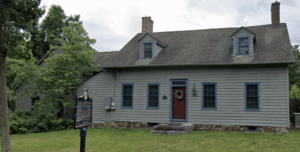
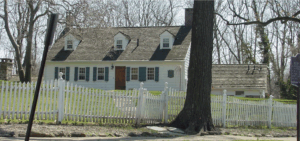
The Sayre House, built in 1745 by Daniel Sayre of Long Island, reflects the style of modest colonial homes from that region. Local legend claims that General Anthony Wayne used the house as his headquarters during the Morristown winter encampment.
The house also has strong ties to Rev. James Caldwell, a close friend of owner Ephraim Sayre. Caldwell often stayed at the home and preached patriotic sermons to passing troops. His wife, Hannah, was later killed during the Battle of Connecticut Farms.
Beyond its Revolutionary links, the Sayre House remains important as one of Madison’s earliest buildings and one of the few surviving examples of early eighteenth-century architecture.
The strongest evidence for Wayne’s stay comes from an 1871 article in the Historical Magazine. It includes eyewitness stories collected by historian Samuel Tuttle. Tuttle interviewed Sarah Sayre Richards, who was eight in 1780. She recalled that Wayne used the front north room, while his guards stayed in the kitchen. She described constant sentinels outside during harsh winter storms and remembered seeing the army pass by on December 13, 1779, with officers stopping for breakfast in several sittings.
Sarah also confirmed that Rev. Caldwell preached in the south front room. Later writers misdated Wayne’s stay to 1777, but Tuttle’s account places it in the winter of 1780–81.
The Sayre House, built in 1745 by Daniel Sayre of Long Island, reflects the style of modest colonial homes from that region. Local legend claims that General Anthony Wayne used the house as his headquarters during the Morristown winter encampment.
The house also has strong ties to Rev. James Caldwell, a close friend of owner Ephraim Sayre. Caldwell often stayed at the home and preached patriotic sermons to passing troops. His wife, Hannah, was later killed during the Battle of Connecticut Farms.
Beyond its Revolutionary links, the Sayre House remains important as one of Madison’s earliest buildings and one of the few surviving examples of early eighteenth-century architecture.
The strongest evidence for Wayne’s stay comes from an 1871 article in the Historical Magazine. It includes eyewitness stories collected by historian Samuel Tuttle. Tuttle interviewed Sarah Sayre Richards, who was eight in 1780. She recalled that Wayne used the front north room, while his guards stayed in the kitchen. She described constant sentinels outside during harsh winter storms and remembered seeing the army pass by on December 13, 1779, with officers stopping for breakfast in several sittings.
Sarah also confirmed that Rev. Caldwell preached in the south front room. Later writers misdated Wayne’s stay to 1777, but Tuttle’s account places it in the winter of 1780–81.